When the Interlude Became the Main Event
See how a comic interlude works inside a larger program, what changes when it stands alone, and how to judge whether its new setting serves the piece.
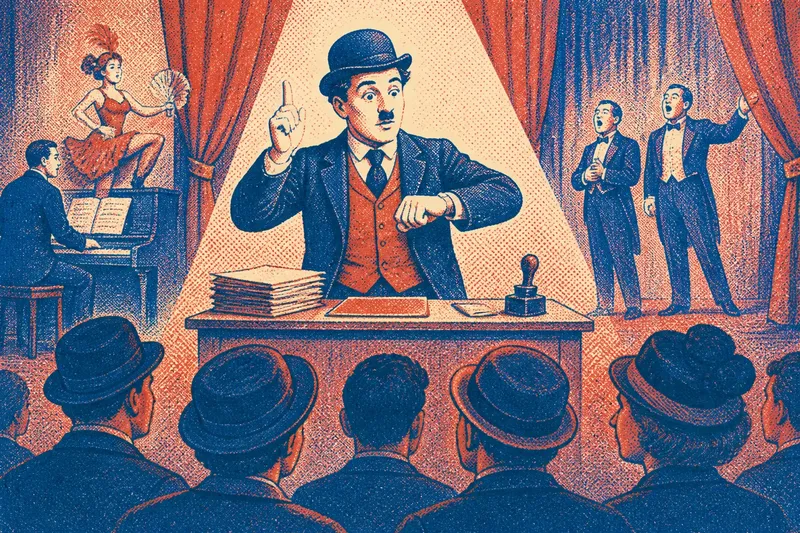
The common mistake is to treat a comic interlude as a disposable pause between the “real” attractions. That can obscure what the form actually does: a short comic turn borrows its meaning from the show around it, while a standalone performance has to establish its own frame. “When the Interlude Became the Main Event” is best understood as a change in presentation and audience expectation, not a single documented historical transition.
A comic interlude depends on its place in the program
A comic interlude is a short performance inserted into a larger entertainment. It might be a sketch, comic song, puppet scene, or brief exchange between performers. The term describes the piece’s position: it sits within a program whose main attraction is something else, and its effect can depend on what came before and what follows.
That position can make contrast part of the comedy. A silly interruption after a serious scene, for instance, may seem sharper because the audience has just been asked to respond differently. A turn between acts can also give a program a change of mood without claiming to be its center.
“Interlude” does not name one fixed genre or historical period. A short piece can function as an interlude in one setting and as the main attraction in another. To describe a specific historical shift, an account would need evidence such as dated programs, advertisements, reviews, or production records. Without those, it is more accurate to discuss the possible change in role than to claim when or how it happened.
The surrounding show supplies context and contrast
In a larger bill, the interlude shares the audience’s attention with the whole event. Spectators may be waiting for the next act, watching a set change, or responding to the mood established by the previous performance. The comic piece is therefore not judged in isolation: its placement can shape how its premise lands.
The surrounding program also gives the performer constraints. A short turn may need to end cleanly so the next act can begin, and a recurring character may be understood through a few recognizable signals rather than a long explanation. Those limits are not automatically artistic weaknesses. They can be the source of a satisfying interruption, provided the audience can follow what the piece is doing.
Becoming the main event changes the contract with the audience
A piece takes on the role of a main event when it is presented as the reason to attend rather than as one element in a larger program. That change can be made by a presenter, venue, or performer; it does not by itself prove that the piece grew out of an interlude over time. A historical claim about such a path requires specific documentation.
The change in framing still matters. An audience that has chosen a comedy performance is invited to give its attention to that work from the start. The performer no longer relies on contrast with a neighboring act to create the evening’s context. A host, a sequence of pieces, or a recurring character can supply a new frame, but each choice changes how spectators interpret the material.
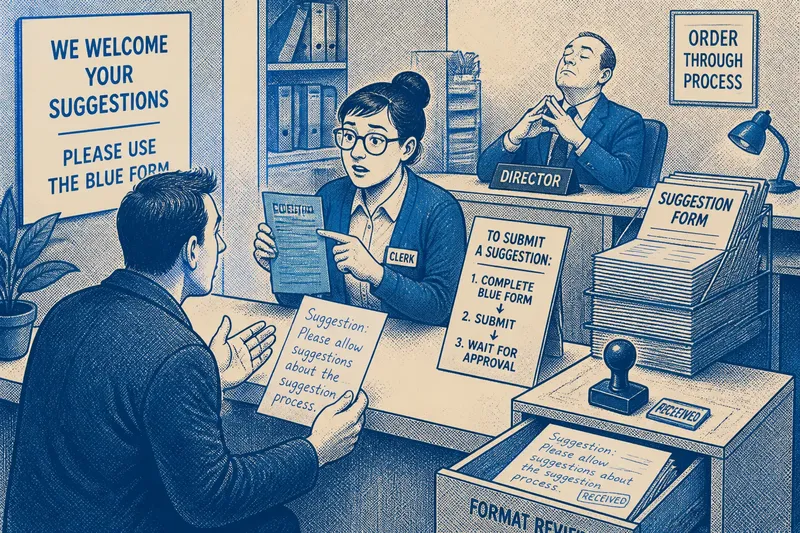
Say a fictional performer has a short sketch about a clerk who refuses to stamp a form until every detail is perfectly aligned. In a variety program, the sketch ends when the next act is ready, and the clerk’s refusal is the whole joke. If the performer presents the sketch as a standalone work, they could add scenes in which the clerk’s rule affects other people and eventually turns back on the clerk. The expected result is a piece whose central conflict develops across scenes rather than ending at its first reversal; the tradeoff is that the performer must create enough new consequences to justify the added frame.
Assess the new setting before expanding the piece
A standalone presentation does not automatically require a longer version. The useful question is whether the setting gives the comedy something new to do. A short act may remain strongest as a brief interruption, while a longer work may need a host, transitions, or connected scenes to replace the context it once borrowed from other acts.
- If the piece relies on contrast with a neighboring performance, then add or identify a deliberate transition; otherwise keep the surrounding bill visible as part of its frame.
- If a character’s premise is clear without explanation, then preserve the quick entrance; if spectators need missing context, add only the detail that makes the conflict legible.
- If a recurring detail gains a different meaning later, then consider linking the scenes; if it only repeats the original laugh, retain the shorter version.
- If the ending depends on the next act entering, then write an ending that feels complete in the new setting; if the handoff is part of the intended effect, preserve it in the program.
- If the audience needs a host to understand how separate pieces belong together, then use a host or another clear frame; if the pieces already form a coherent sequence, avoid adding an unnecessary presenter.
- If added scenes change the character’s situation or the audience’s interpretation, then keep developing the work; if they merely restate the premise, return to the compact form.
What is not worth the effort is adding dialogue simply to make a short piece appear more substantial. Expansion earns its place when the new material changes the audience’s understanding of the work, not just its running order.
What do audiences and performers ask about comic interludes?
Is an interlude the same as a variety act?
No. An interlude is defined by its place within a larger program; a variety act is a form built around distinct turns or skills. A variety act can be used as an interlude, but it can also headline its own bill.
Can a short comic piece stand alone?
Yes. If the piece has a clear premise and an ending suited to its length, it can be presented as the reason to attend without being stretched into a longer work.
Does a main-event presentation prove that a piece began as an interlude?
No. The way a piece is billed now does not establish its earlier role. For a historical claim, look for dated programs, advertisements, reviews, or other records that connect the same work or performer across different settings.
How can a performer decide whether to expand a piece?
Check whether new scenes create consequences or alter how the central premise reads. If they only repeat the first turn, the short version is likely the more focused choice.
The change in status is a change in framing
A comic interlude and a main-event performance can share material while asking for different kinds of attention. One may gain force from its place among other acts; the other must make its own context and carry the audience through the work. Neither role is inherently more valuable, and a change in billing alone does not establish a historical origin story.
When assessing a comic interlude, identify what the surrounding program contributes: contrast, timing, a handoff, or a shared frame. Then ask what the piece needs if that support disappears. That distinction clarifies the form without claiming a history that the available evidence has not established.